Open Shelving That Still Looks Tidy on a Wednesday
Open shelving photographs beautifully and lives badly — unless you set one rule about what goes on it before you hang anything.
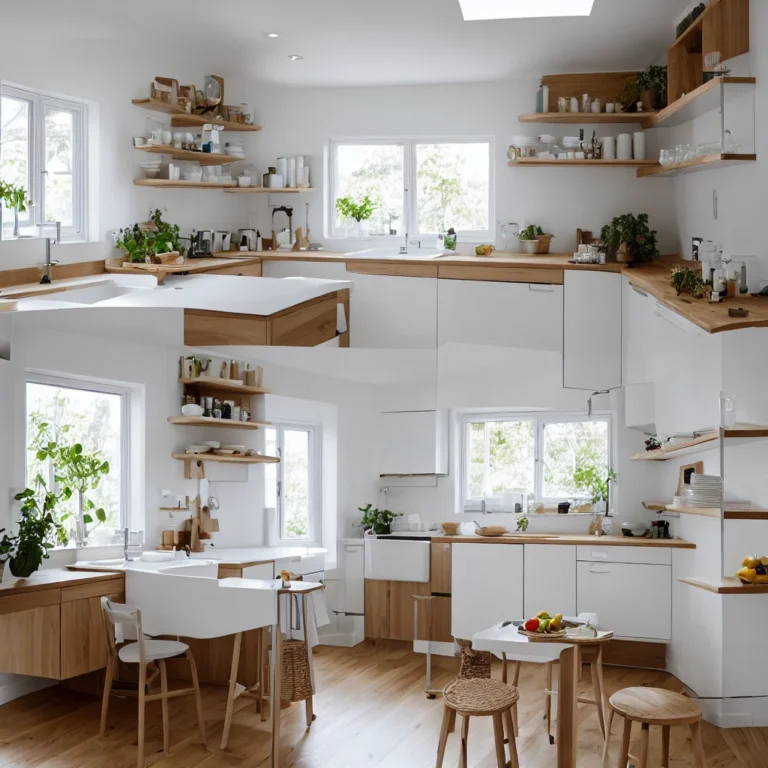
[ADD IMAGE HERE] — Open kitchen shelving holding plates, jars and a small vase. Vertical shot, 1000x1500px.
The rule: only things you use weekly
Open shelves work when everything on them is in rotation. Plates you eat off, glasses you drink from, the three jars you actually cook with. Those items get handled constantly, so they never gather the film of grease and dust that makes open shelving look neglected.
Anything used monthly or less goes behind a door. That single rule is the difference between the photo and the reality.
Two shelves, not four
Four shelves turn a wall into storage. Two shelves keep it a wall with storage on it. In a small kitchen the second version is what makes the room feel open — which was the point of removing the cupboards in the first place.
Bracket spacing, so it does not sag
This is the part that goes wrong. Loaded with plates, a shelf carries far more weight than people estimate — a stack of twelve dinner plates is around 8 kg on its own.
- Brackets every 60 cm for 2 cm thick timber. Every 45 cm if the shelf is thinner or carrying stacked plates.
- Never more than 20 cm of overhang past the last bracket.
- Fix into studs or use proper cavity anchors. Standard plasterboard plugs are not rated for this and will pull out over months, not days.
Check before you drill. A cheap stud and pipe detector costs about $18 and is worth it in a kitchen, where water pipes run behind the wall far more often than in other rooms.
What it cost
| Item | Cost |
|---|---|
| Two timber boards, 120 cm | $34 |
| Four brackets | $24 |
| Cavity anchors and screws | $7 |
| Wood oil | $12 |
| Total | $77 |
Styling it without it looking styled
Stack plates, do not fan them. Group jars in threes. Leave roughly a third of each shelf empty — the gaps are what stop it reading as a cupboard with the door removed. One plant or one piece of colour per shelf is enough.
Project at a glance
- Cost — $77
- Time — One weekend
- Skill — Intermediate
- Rental safe — No, needs drilling
Questions people asked
How far apart should kitchen shelf brackets be?
Every 60 cm for 2 cm thick timber, closer to 45 cm for thinner boards or stacked plates. Keep any overhang past the end bracket under 20 cm.
Does open shelving get greasy?
Near a hob, yes. Keep open shelves at least a metre from the cooktop, or accept a wipe-down every fortnight.
How deep should kitchen shelves be?
Between 20 and 25 cm. Deeper shelves swallow items at the back and start to loom over the worktop.
Next project
Kitchen lighting is usually the next problem. The three-lamp rule applies there too.