10 Cozy Small Living Room Ideas That Feel Bigger (And So Much Warmer)
Let’s be honest—small living rooms can feel like a puzzle. You want it to feel warm and inviting, but you also don’t want it to look cluttered or cramped. I’ve been there, staring at a tiny space and wondering how to make it feel like a hug in room form.
The good news? Cozy doesn’t require square footage. It’s all about layering textures, choosing the right scale, and being a little clever with your layout. Here are my absolute favorite cozy living room ideas for small spaces that actually work.
1. Float Your Furniture Away From the Walls
I know it sounds counterintuitive, but pushing everything against the wall can actually make a small room feel smaller. When you float your sofa or chairs even just a few inches inward, you create a sense of depth and a defined conversation area.
In my own apartment, pulling my loveseat forward about a foot made the whole room feel more intentional. It created a little walkway behind the couch, which tricked the eye into seeing more floor space.
Try it: angle a chair toward the sofa instead of the TV. It instantly makes the room feel more social and cozy.
2. Use a Round Coffee Table to Open Up the Flow
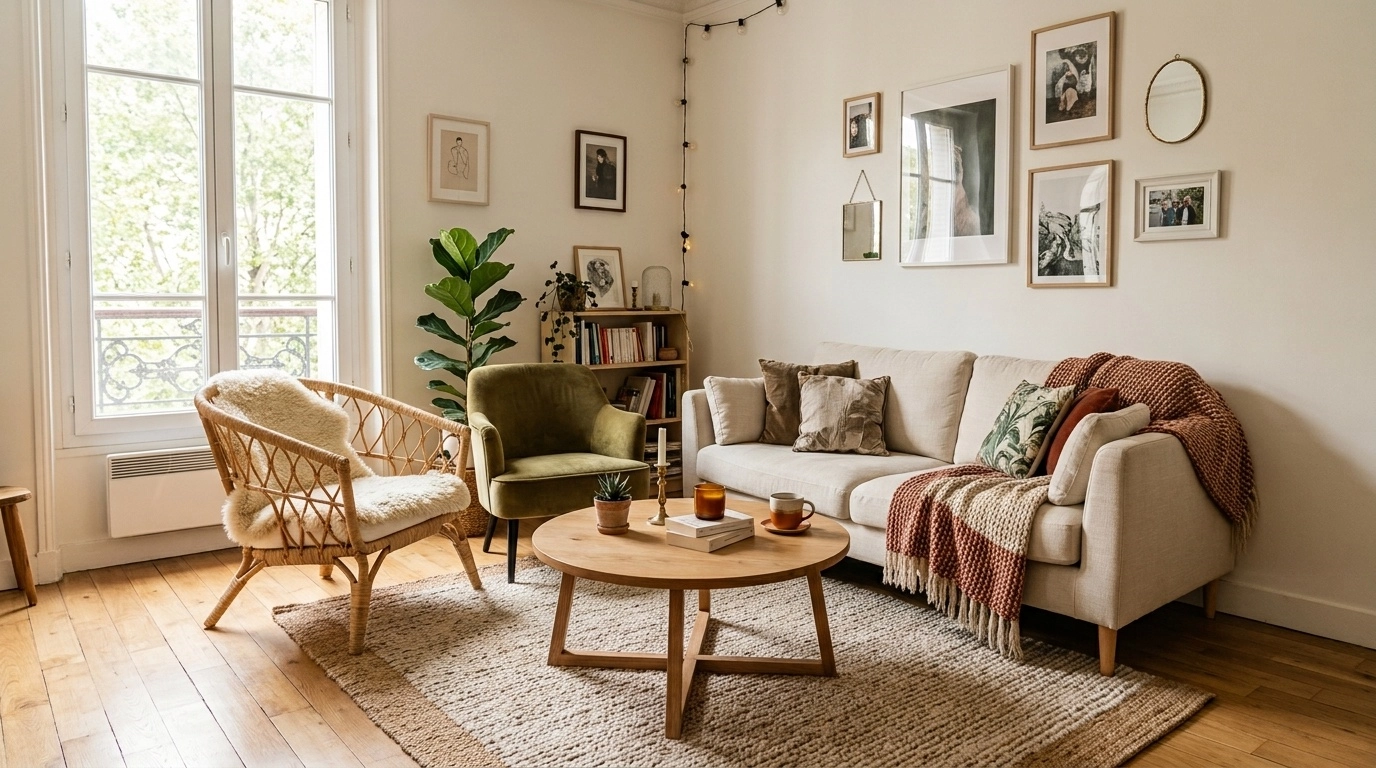
Sharp corners on a coffee table can make a small space feel boxy and tight. A round or oval table softens the lines of the room and makes it easier to walk around without bumping your shins.
I swapped my bulky rectangular table for a small round wooden one, and it changed everything. It takes up less visual space, but still holds my coffee mug and a stack of books just fine.
If you’re really tight on space, look for a nesting table set. You can pull out the smaller one when you have guests, then tuck it away when you don’t.
3. Layer a Chunky Throw Blanket Over Everything
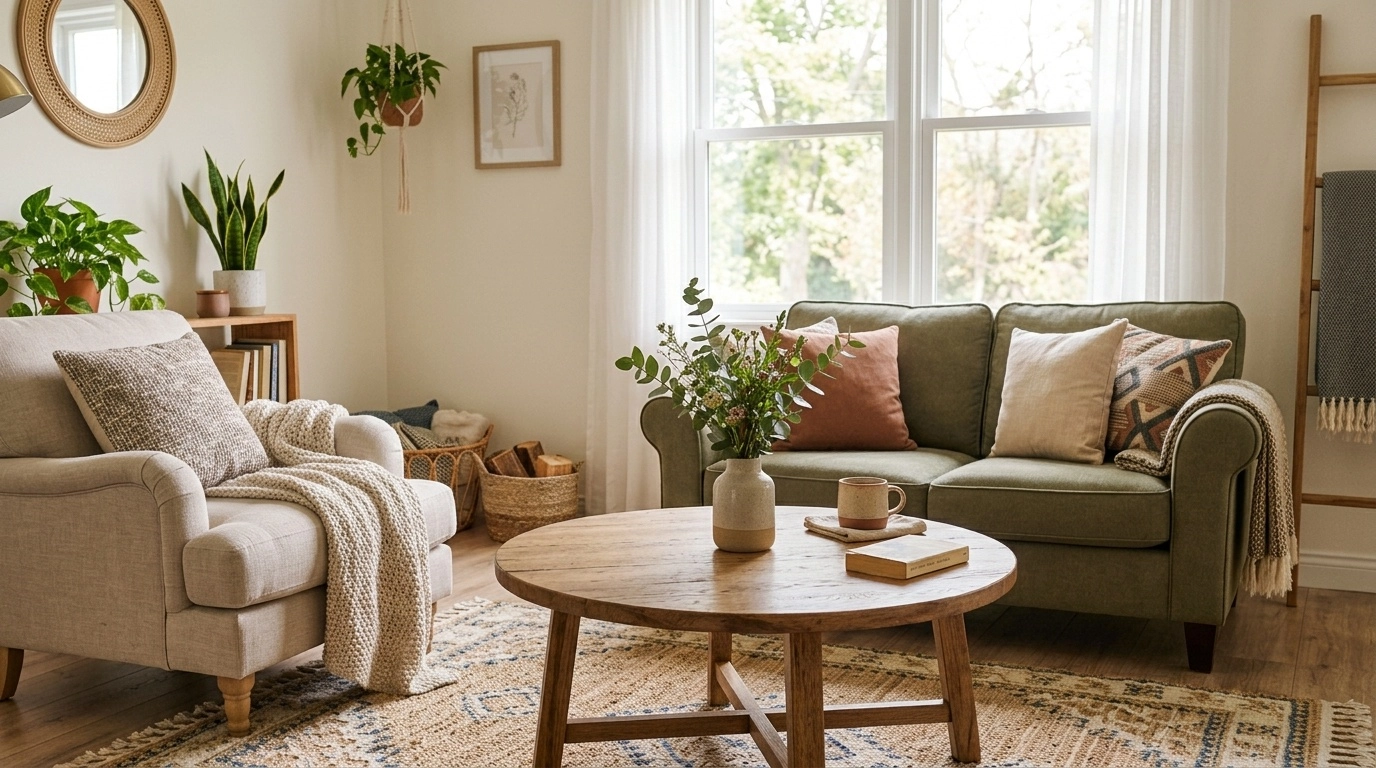
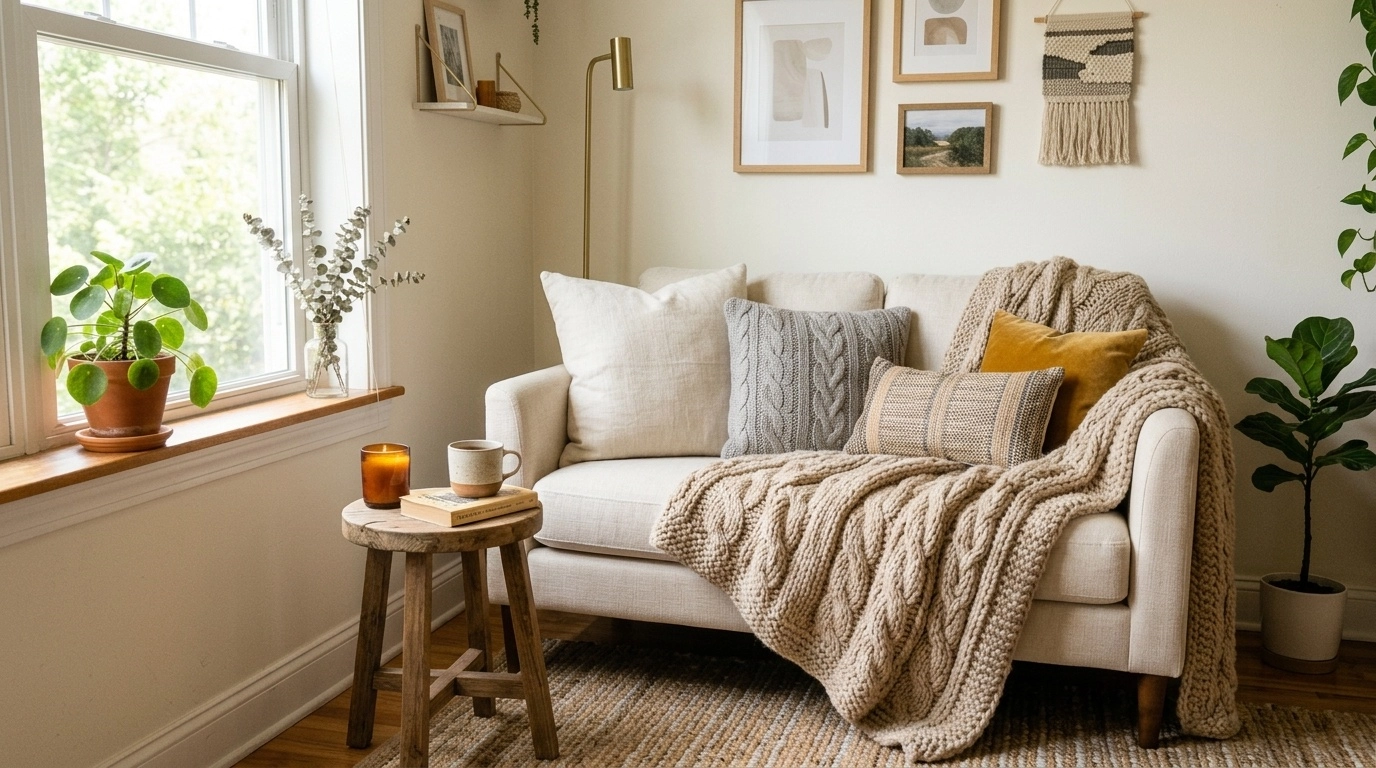
Texture is your best friend in a small space. A chunky knit or faux fur throw blanket instantly adds warmth and makes even the simplest sofa look like it belongs in a cozy cabin.
Don’t just fold it neatly. Drape it casually over the back of the couch or toss it over one corner. The slightly messy look is what makes it feel lived-in and inviting.
I also love keeping a small basket of extra blankets nearby. It’s practical storage, but it also adds a nice visual layer to the room.
4. Add a Floor Lamp That Reaches High
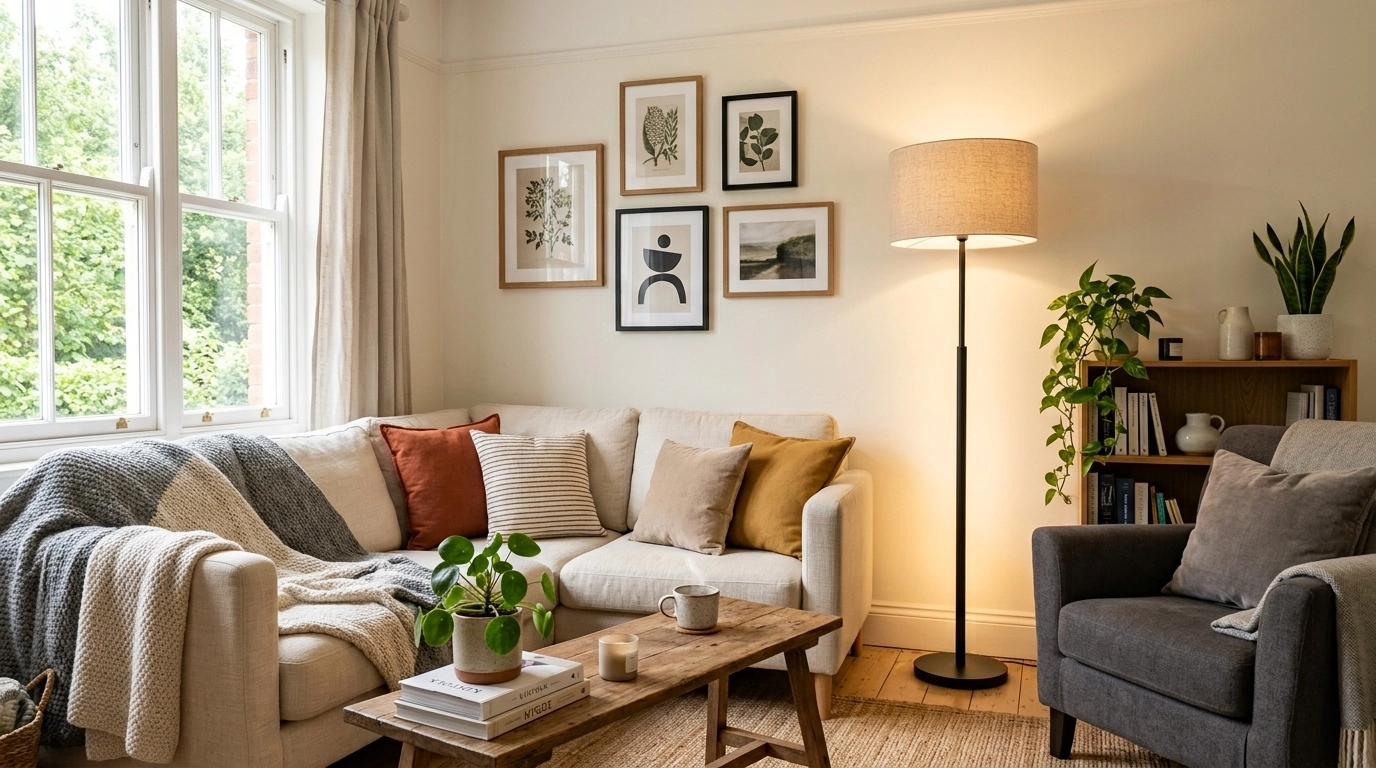
When your floor space is limited, look up. A tall, slim floor lamp draws the eye upward, making your ceiling feel higher and the room feel more spacious.
Warm, soft lighting is key for a cozy vibe. I always choose a lamp with a fabric shade—it diffuses the light so much better than a bare bulb or a harsh LED.
Place it in a corner that feels empty. It fills the void without taking up any precious surface area.
5. Install Floating Shelves Instead of Bookcases
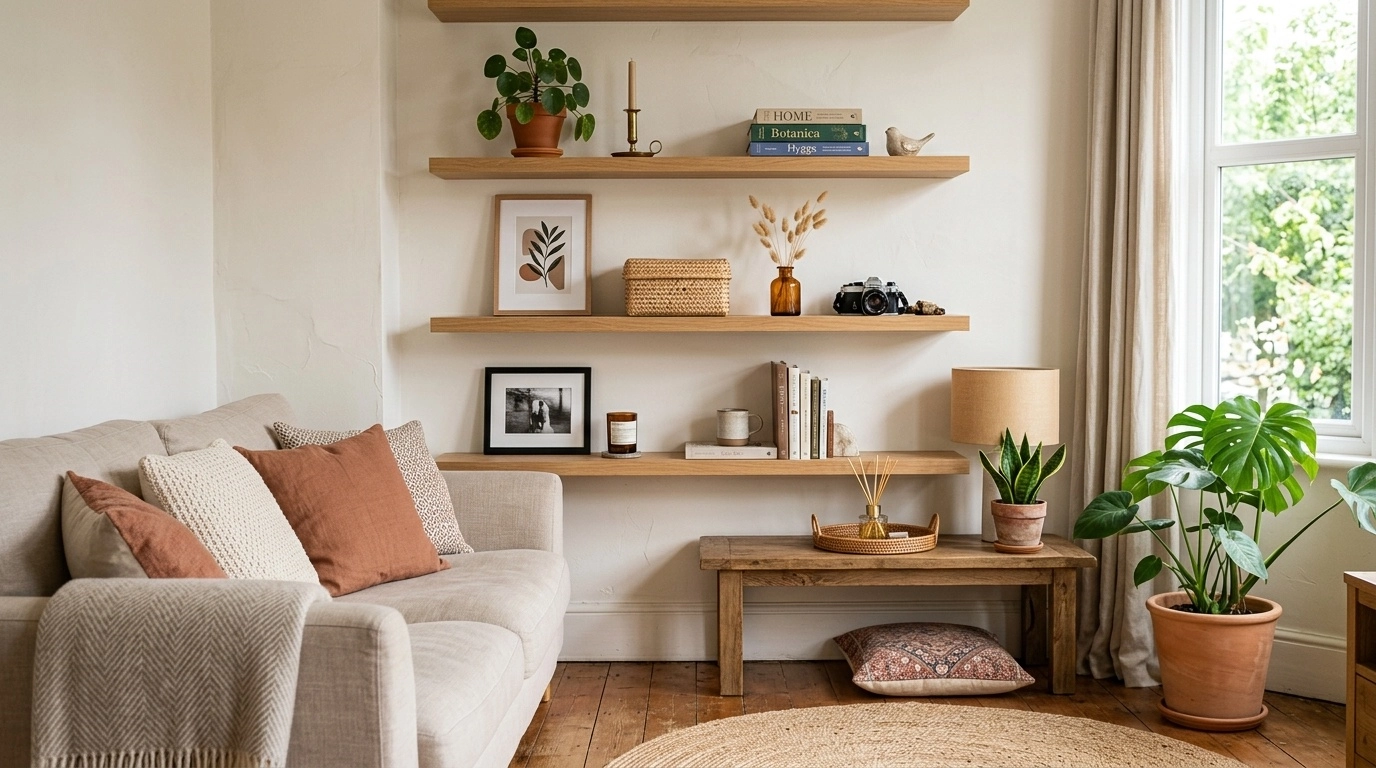
Big, bulky bookcases can swallow a small room whole. Floating shelves, on the other hand, give you storage and display space without eating into your floor plan.
I put two wooden floating shelves above my TV console. They hold my plants, candles, and a few small framed photos. It keeps the clutter off the surfaces below and adds visual interest at eye level.
Mix up what you put on them. Stack a couple of books horizontally, add a small vase, and leave some breathing room. Don’t overstuff them.
6. Choose a Low-Profile Sofa or Loveseat
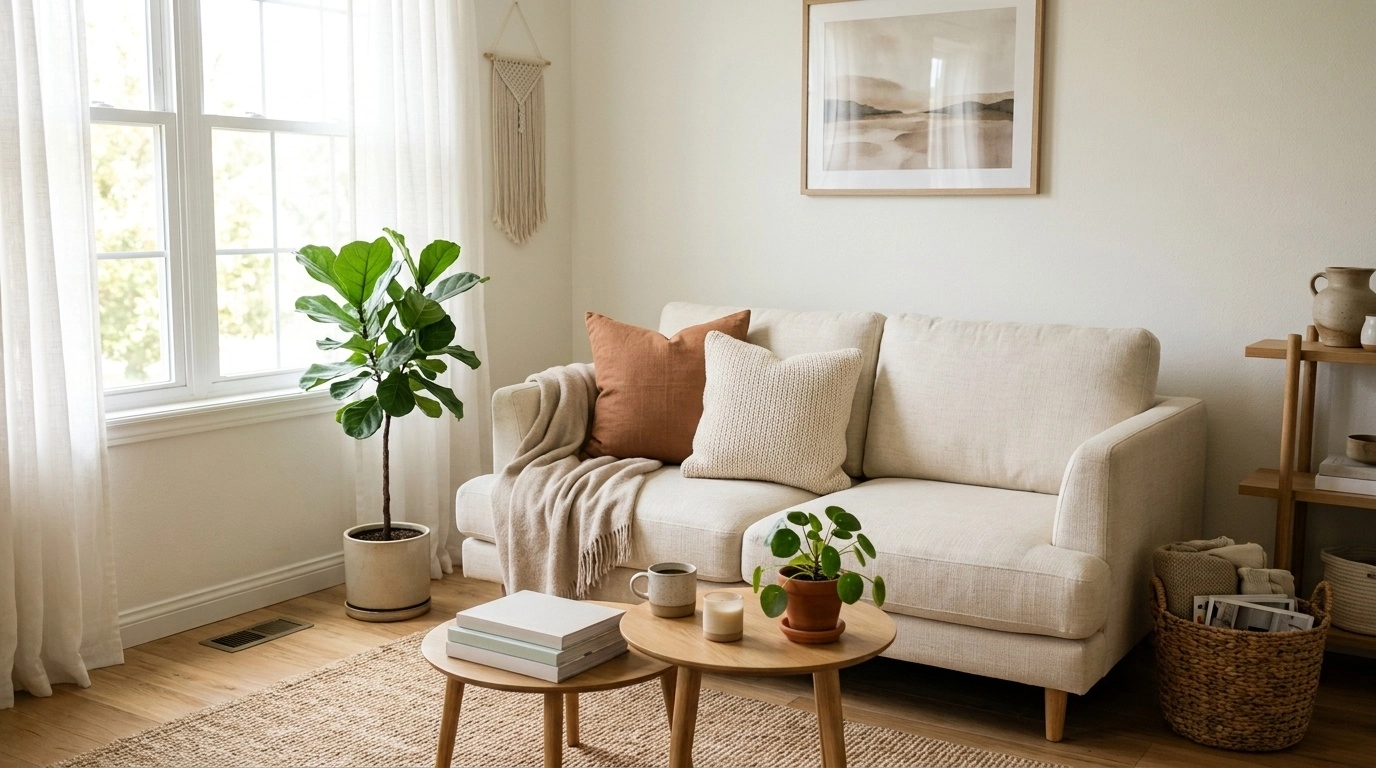
High-back, bulky sofas can make a room feel top-heavy and cramped. Low-profile furniture with shorter backs and exposed legs creates a more open, airy feel.
If you’re buying new, look for a loveseat or a small apartment-sized sofa with slim arms. The legs lift the piece off the floor, which helps the eye travel under the furniture and makes the whole room feel bigger.
I found a mid-century style loveseat with tapered wooden legs, and it’s perfect. It fits two people comfortably but doesn’t dominate the room.
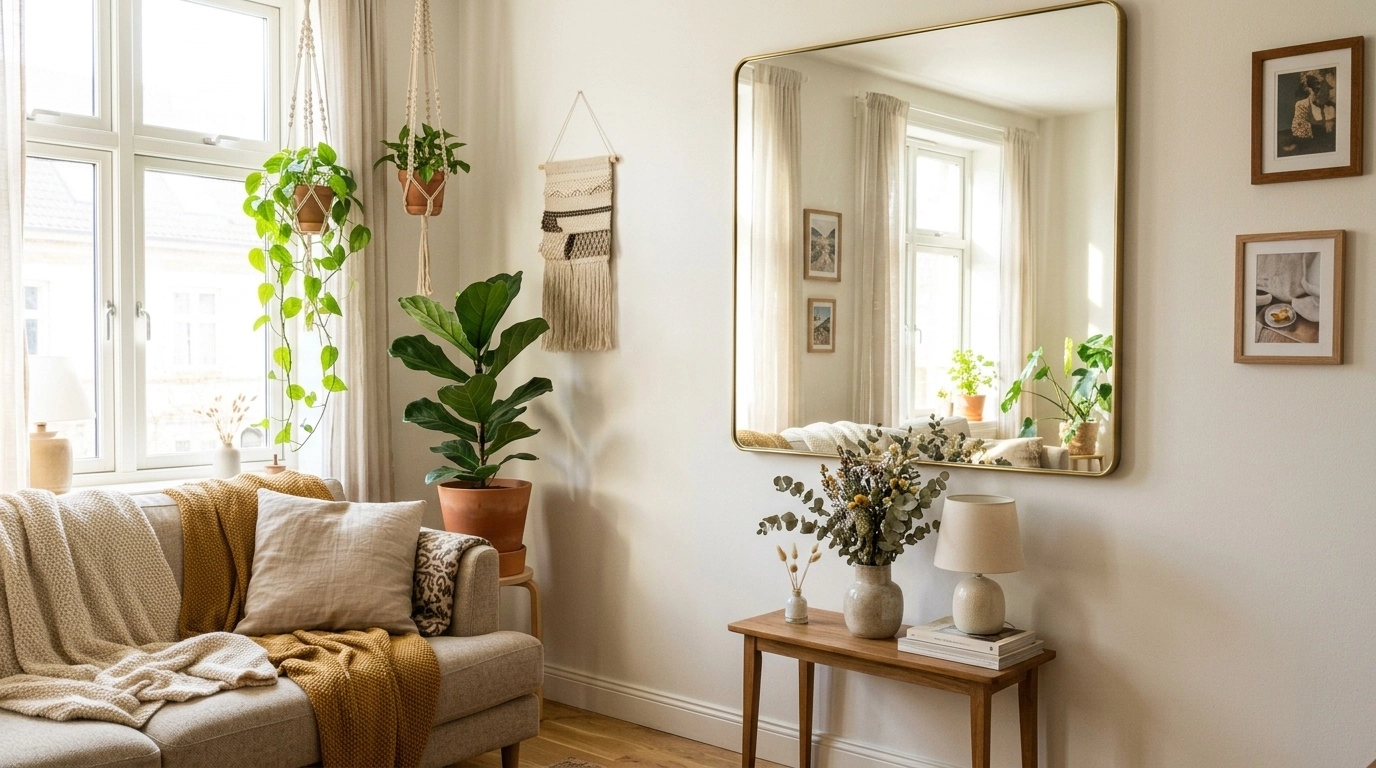
7. Use a Large Mirror to Double the Light
This is the oldest trick in the small-space book, but it works. A large mirror reflects both natural and artificial light, instantly making the room feel brighter and more expansive.
Place it across from a window if you can. The reflection of the outdoors brings a little bit of nature inside, which always makes a space feel calmer.
I have a big arched mirror leaning against the wall on a shelf. It’s a statement piece, but it also works hard to open up my tiny living room.
8. Define Zones With a Simple Rug
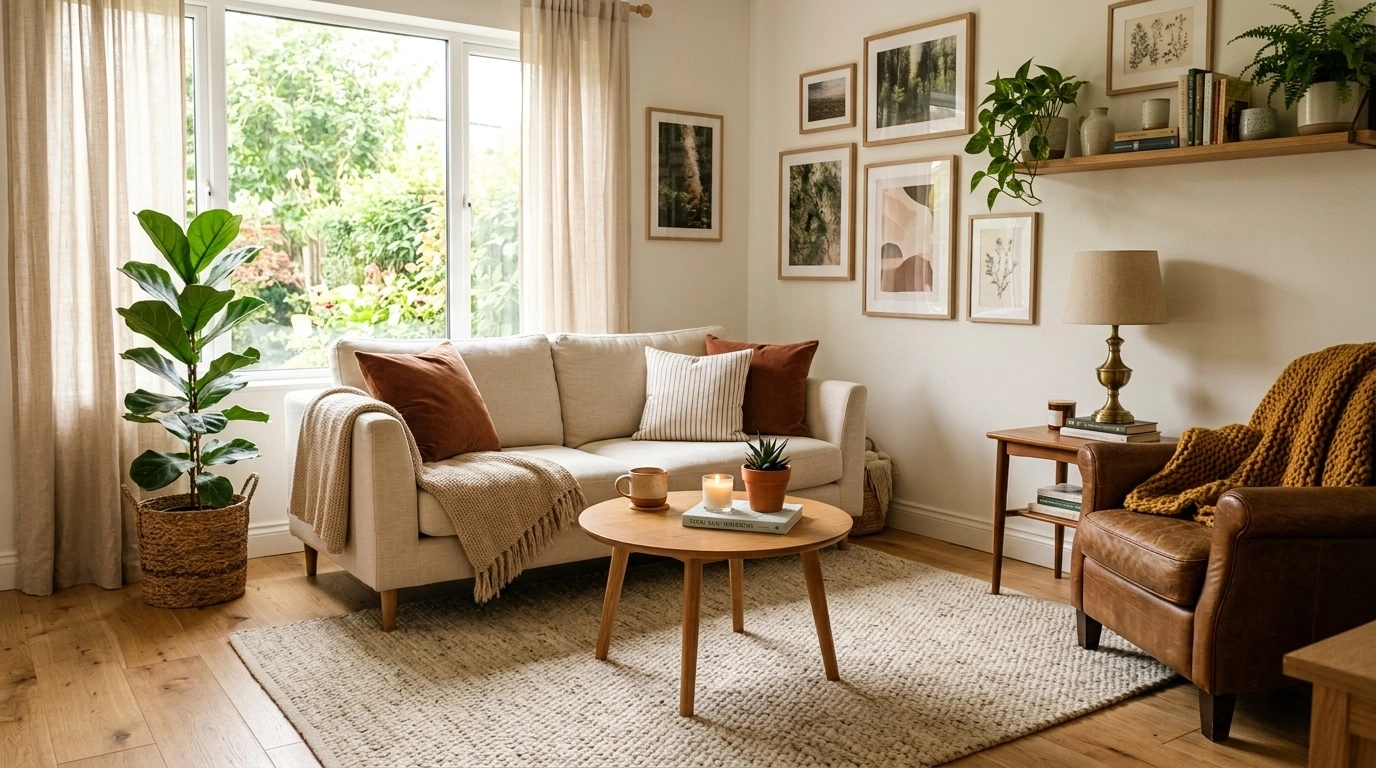
In a small space, you only need one rug. A large rug that fits under the front legs of your sofa and extends out into the room helps define the seating area and makes the space feel grounded.
Avoid tiny rugs that float in the middle of the room—they just make the space look choppy. Go as big as you can while leaving at least a few inches of floor visible around the edges.
I chose a soft, low-pile wool rug in a light neutral tone. It feels warm underfoot and doesn’t visually shrink the room like a dark, busy pattern would.
9. Bring in Greenery With a Tall Plant
Plants add life, color, and a sense of calm to any room. In a small space, one tall, slim plant can act as a natural sculpture that fills an empty corner without taking up much room.
A fiddle leaf fig, snake plant, or a tall olive tree are great options. They grow upward, not outward, so they’re perfect for tight spots.
I keep a snake plant by my window. It’s nearly indestructible, and it gives the room a fresh, organic feel. Plus, it helps purify the air a little.
10. Swap Heavy Curtains for Sheer or Roman Shades
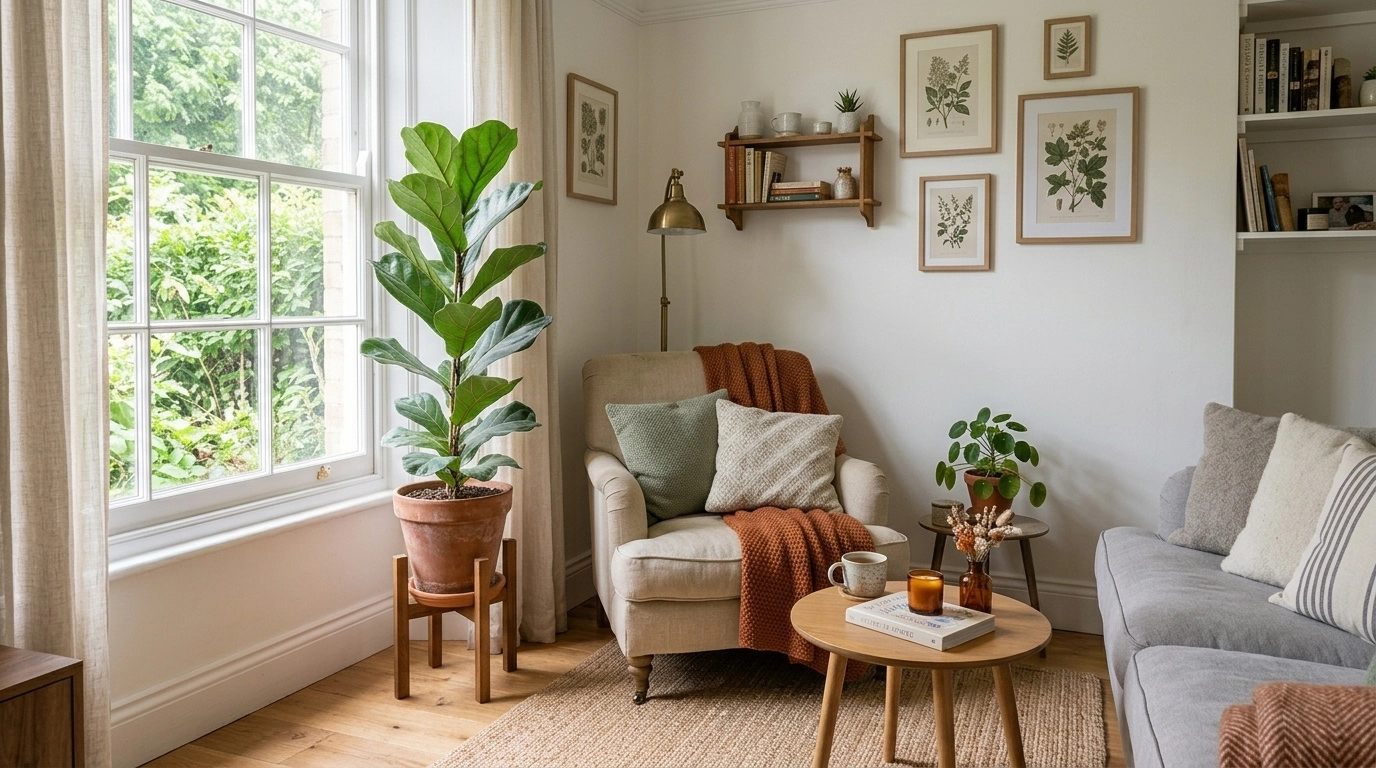
Dark, heavy curtains can block light and make a small room feel like a cave. Lighter window treatments let in more natural light, which is the easiest way to make a space feel bigger and more welcoming.
I switched to white linen curtains that hang just above the floor. They let the sunlight filter through beautifully, and they add a soft, airy texture to the room.
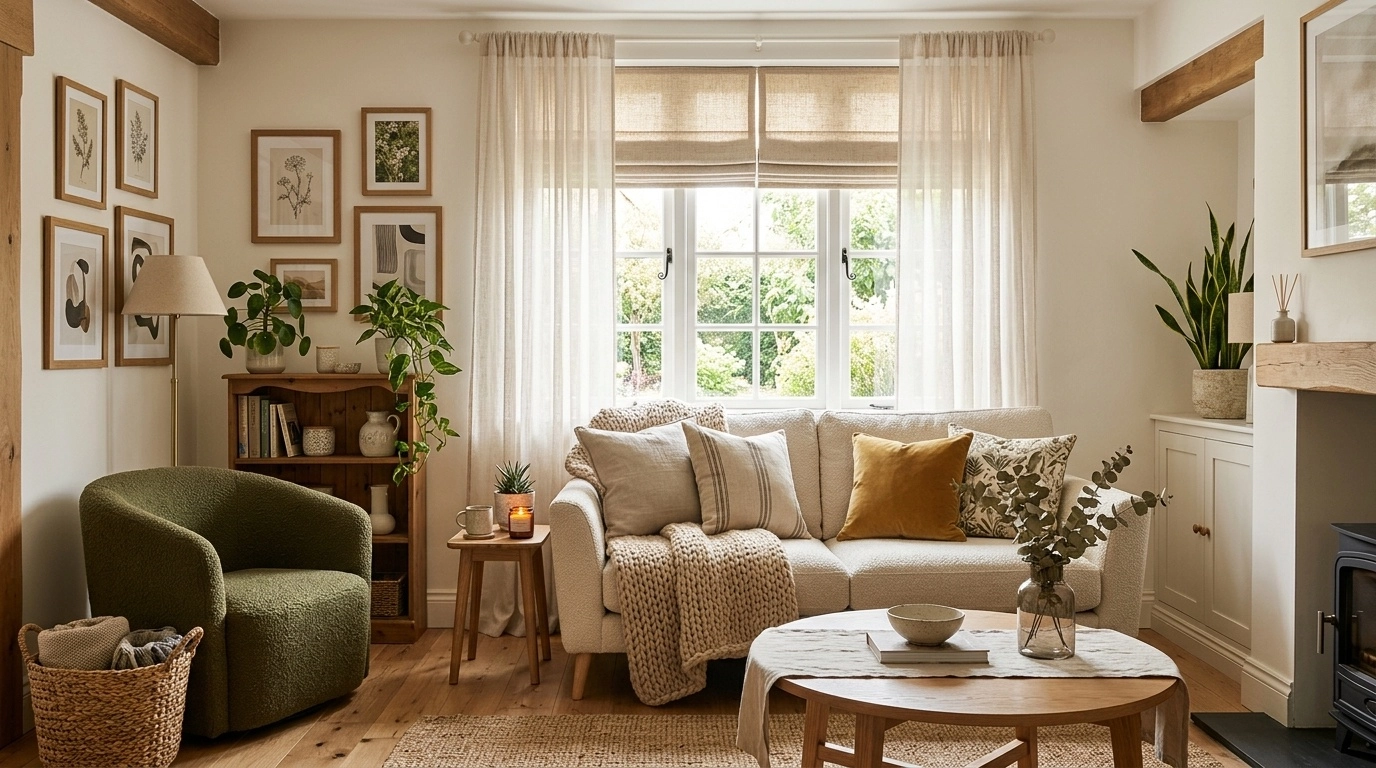
If you want even more simplicity, try Roman shades. They’re clean, minimal, and don’t add any visual bulk to the windows.
Final Thoughts: Cozy Is a Feeling, Not a Size
Your small living room has so much potential. It just needs a little thoughtful styling. Focus on light, texture, and scale, and you’ll create a space that feels warm, inviting, and totally you.
Start with one or two of these ideas, and see how they change the feel of your room. You don’t need to do everything at once. Small changes make a big difference.
Frequently Asked Questions
What colors make a small living room look bigger?
Light, neutral colors like white, cream, soft beige, and light gray are your best bet. They reflect light and make walls recede. You can still add pops of color with pillows and decor, but keep the base light.
How do I make a small living room cozy without clutter?
Use hidden storage like ottomans with lids, baskets, and floating shelves. Keep surfaces clear and display only a few meaningful items. Cozy comes from texture and lighting, not from having lots of stuff out.
Should I use a big rug or a small rug in a small room?
Bigger is better. A large rug that anchors your furniture makes the space feel more cohesive and grounded. A small rug can make the room feel choppy and smaller than it is.
What kind of lighting is best for a cozy small space?
Warm, soft lighting is key. Use a mix of floor lamps, table lamps, and maybe a small string light or candle. Avoid harsh overhead lighting and opt for multiple lower light sources.
Can I have a lot of furniture in a small living room?
You can, but it needs to be the right scale. Choose a few multipurpose pieces and keep them slim. A loveseat, a small side table, and one accent chair is usually plenty for a small space.