8 Modern Kitchen Organization Hacks You Must Try (For a Clutter-Free Space)
Let’s be real for a second. The kitchen is the heart of the home, but it’s also where all the clutter goes to die. Between mismatched Tupperware, overflowing spice racks, and that one drawer full of mystery gadgets, it can feel like a full-time job just to keep things tidy.
The good news? You don’t need a massive renovation or a professional organizer to turn things around. I’ve spent way too many weekends testing trendy storage ideas (some flops, some absolute game-changers), and I’ve narrowed it down to the eight best modern hacks that actually work. These are simple, budget-friendly, and designed for real life—not just for a perfect Pinterest photo. Let’s dive in and finally give that countertop some breathing room.
1. Maximize Vertical Space with Slim Shelf Risers
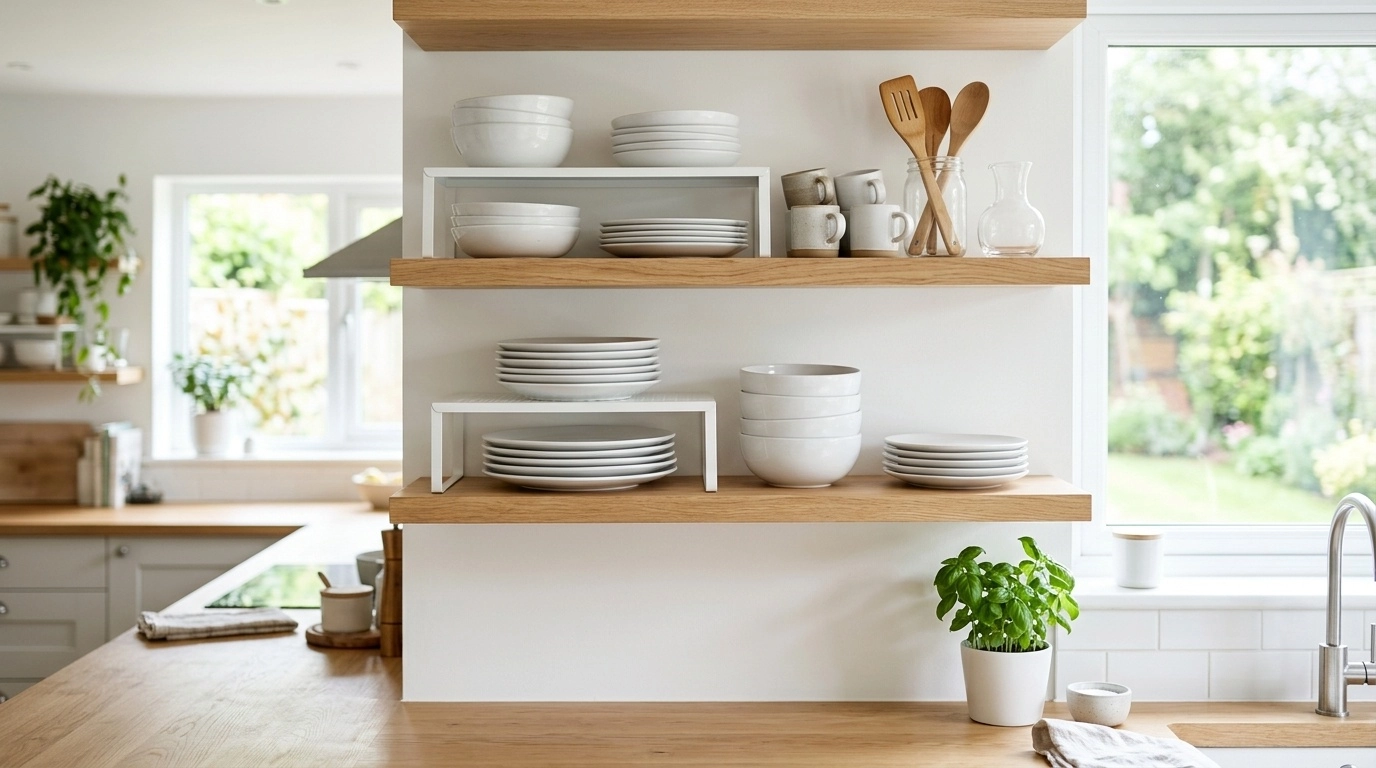
If your cabinets are a black hole where plates and bowls go to stack precariously, this hack is for you. Instead of playing Jenga every time you need a dinner plate, use slim, expandable shelf risers. They instantly double your cabinet space and let you see everything at a glance.
I love using these specifically for mugs and small bowls. You can stack two layers of cups without them toppling over. It’s such a simple fix, but it makes grabbing your morning coffee feel effortless instead of a balancing act.
Don’t stop at the cabinets—these risers work wonders on pantry shelves for canned goods, too. You’ll actually see what you have before buying a third jar of pasta sauce.
2. The “Zone” Method for Your Refrigerator
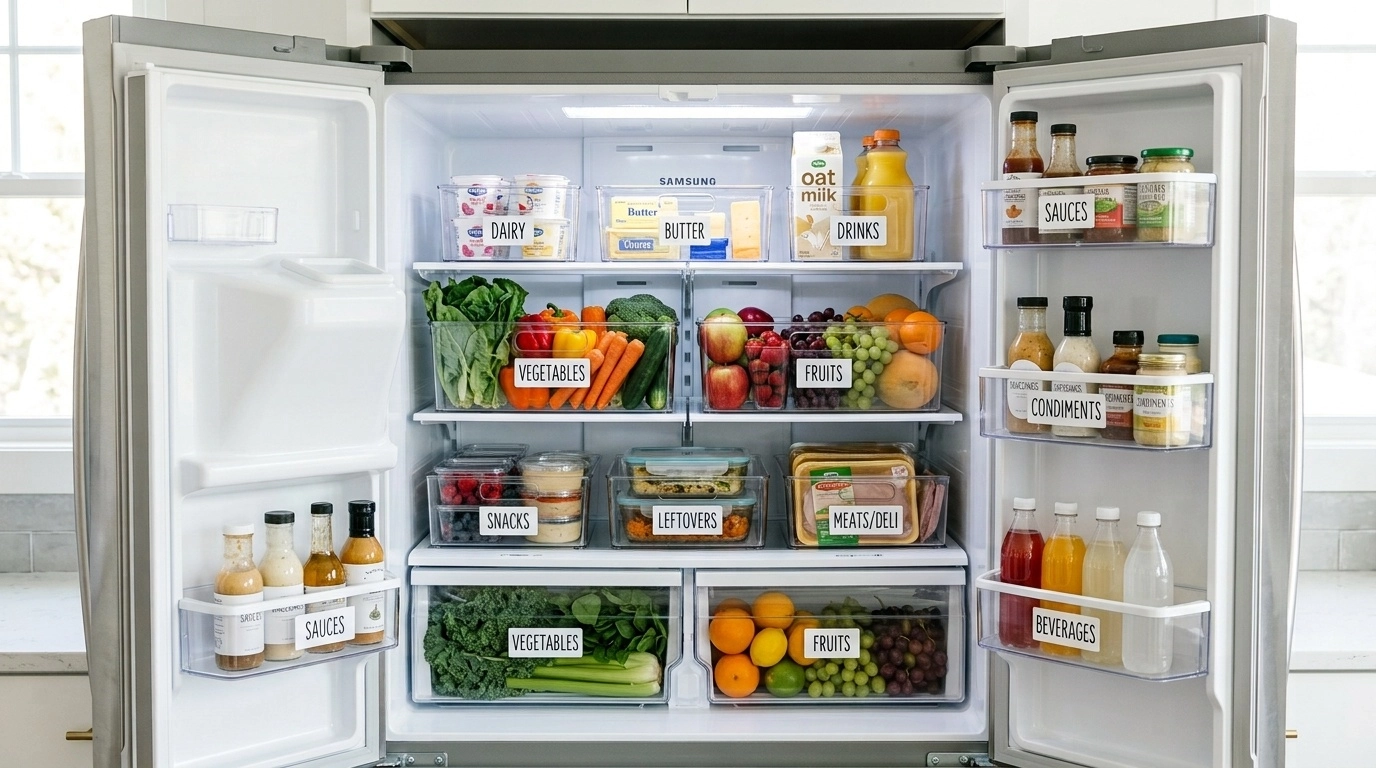
Stop treating your fridge like a giant abyss. The modern way to organize is by creating specific “zones.” This isn’t just about looking pretty; it’s about food waste prevention. When you can see what you have, you actually eat it.
Start by designating a “snack zone” on the middle shelf. Use clear, shallow bins to hold yogurt, cheese sticks, and fruit. Kids (and adults) can grab a snack without rummaging through everything and knocking over a bottle of kombucha.
Make your bottom drawer the “produce zone,” but don’t just toss things in. Separate fruits from veggies using two distinct bins. This is key because fruits release ethylene gas that makes veggies wilt faster. Your greens will last twice as long, saving you money and trips to the store.
3. DIY Drawer Dividers That Actually Fit
I used to hate my “junk drawer.” It was a chaotic mess of rubber bands, takeout menus, and loose batteries. The problem was always that store-bought dividers didn’t fit my weird drawer dimensions. The solution? Expandable bamboo dividers.
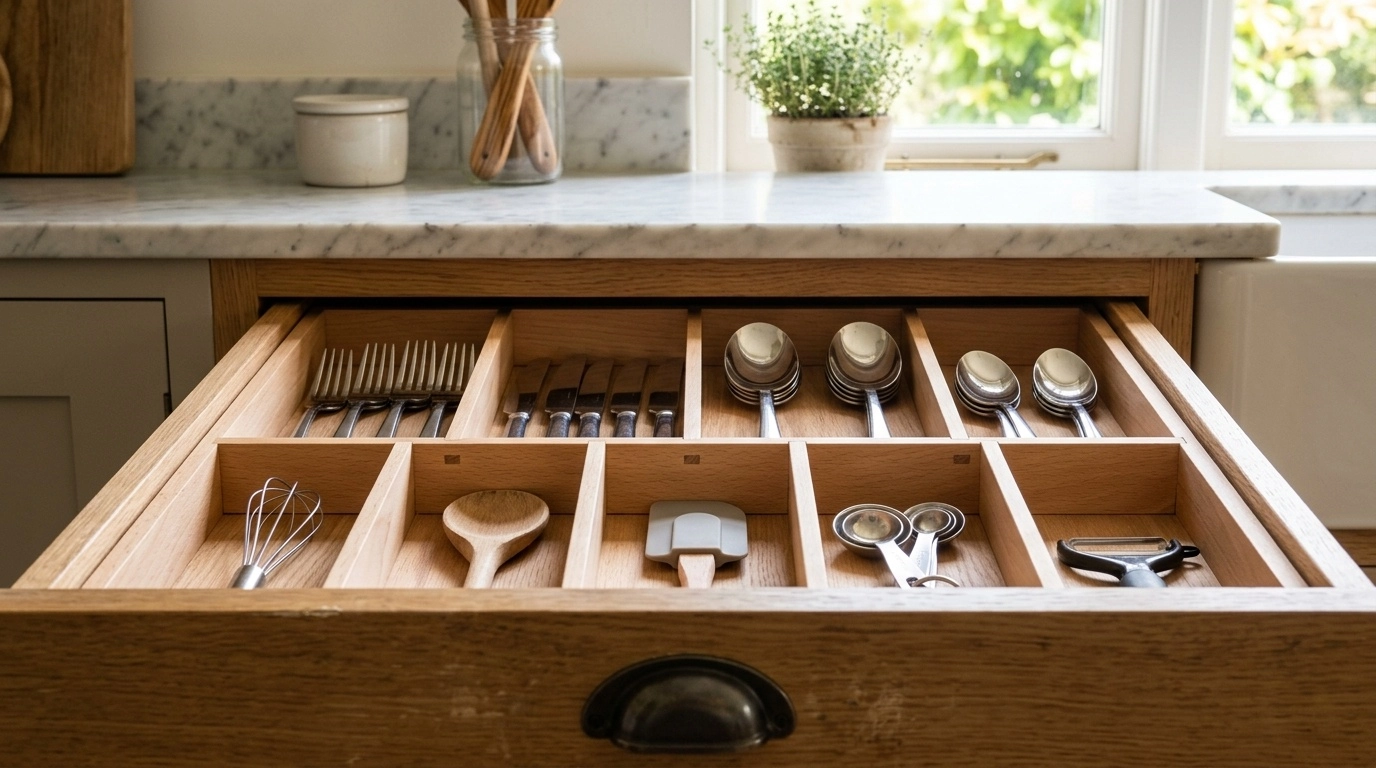
These are the unsung heroes of kitchen organization. You twist a little knob, and they expand to fit any width. They grip the sides of the drawer without any screws or sticky tape, so they are completely damage-free.
You can finally give every single utensil a home. Spatulas, whisks, and tongs will stand up vertically, which is a total game-changer compared to tossing them in a pile. It feels so luxurious to open a drawer and see everything in its designated spot.
4. Clear Pantry Bins for Aesthetic & Function
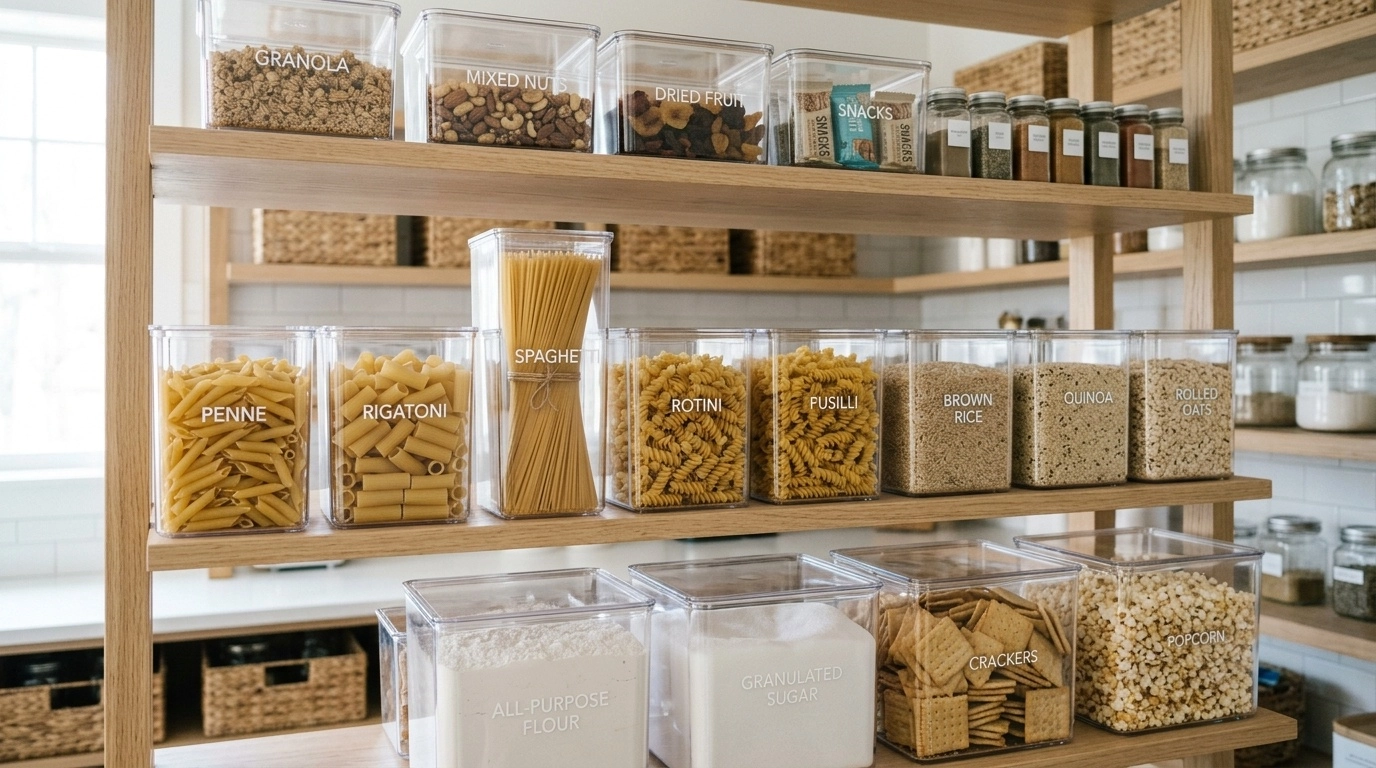
If you want that high-end, magazine-worthy pantry look without hiring a designer, this is the secret. Ditch the cardboard boxes and mismatched bags. Invest in a set of clear, airtight bins for your dry goods like pasta, cereal, and flour.
It’s not just about looks (though I admit, a uniform pantry makes me unreasonably happy). Clear bins help you monitor freshness and portion sizes. You can instantly see if you’re running low on rice before you start cooking.
Pro tip: Use square bins instead of round ones. They fit snugly against each other and maximize every inch of shelf depth. You’ll be amazed at how much more you can fit in the same amount of space when everything is perfectly square and stackable.
5. Under-Sink Magic with Tension Rods
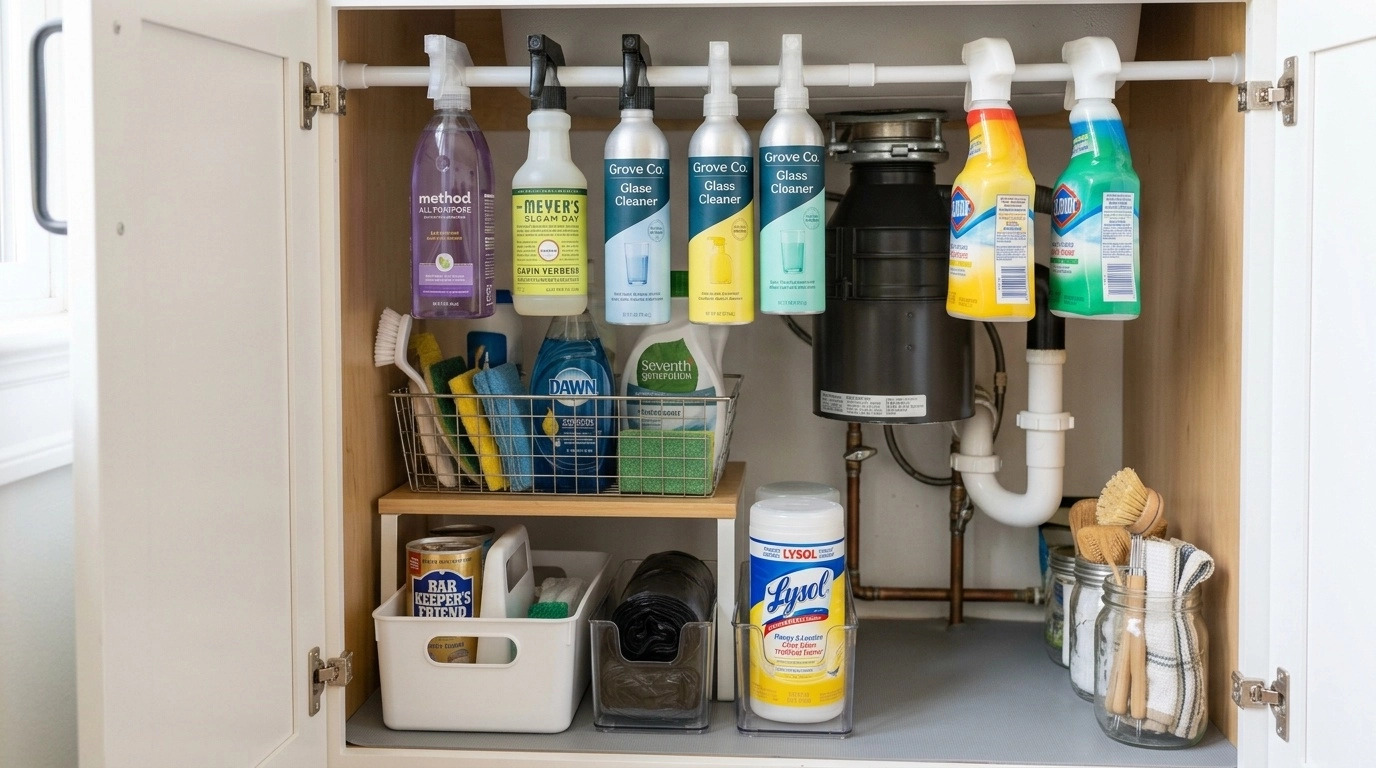
The under-sink area is usually the scariest zone in the kitchen. It’s a dark, damp cave where cleaning supplies go to multiply. But a simple tension rod can turn that chaos into a functional space.
Install a tension rod horizontally under the sink. Then, hang your spray bottles (like all-purpose cleaner and window spray) upside down by the trigger. This keeps them off the floor and makes them super easy to grab.
You can add a second tension rod vertically to act as a barrier, keeping your bin liners and sponges from sliding around. This hack costs less than ten dollars and completely transforms a space you usually ignore. It’s practical and surprisingly satisfying.
6. Lazy Susans: Not Just for Spices
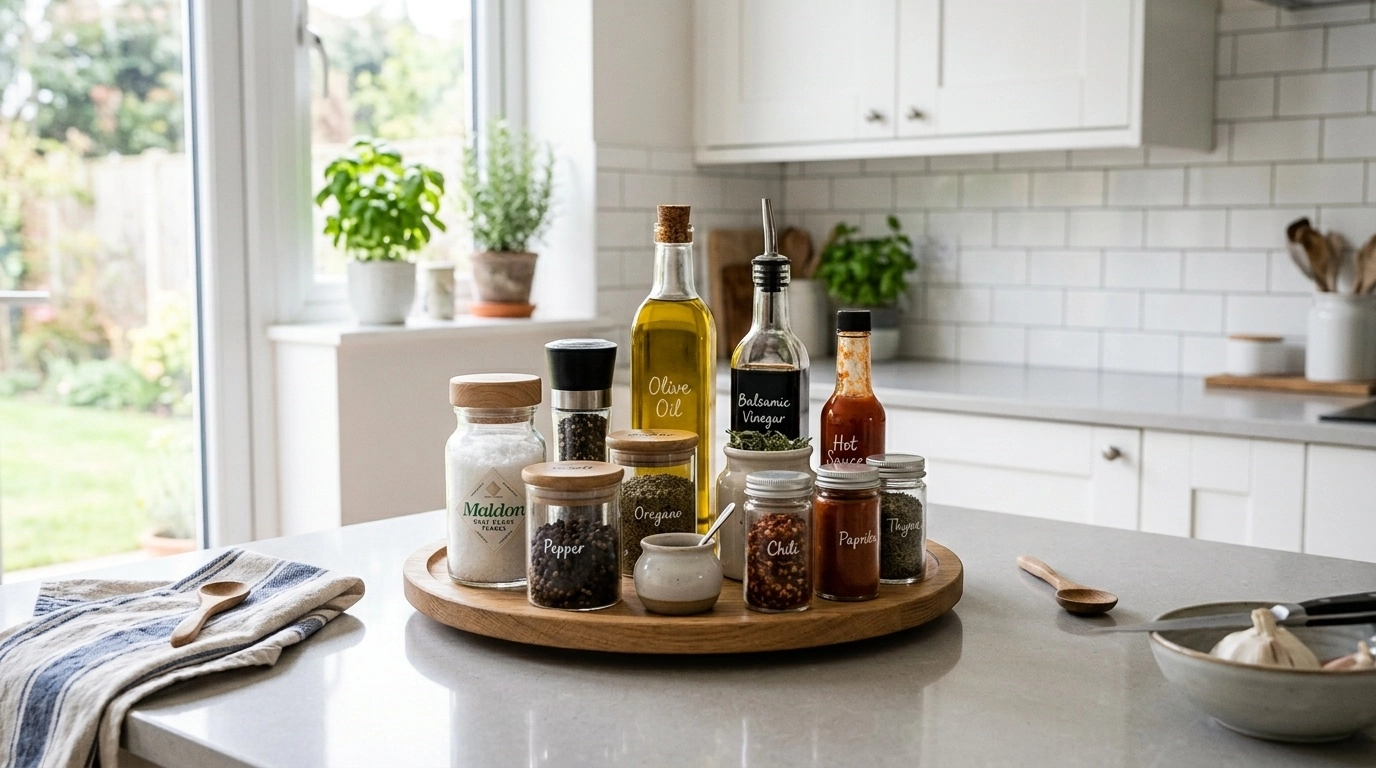
You’ve probably seen a Lazy Susan used for spices, but have you thought about using them for your cooking oils and sauces? These rotating trays are perfect for deep cabinets where things get lost in the back.
Place one on your countertop next to the stove filled with your daily-use oils, salt, and pepper. This creates a functional “cooking station” that you can spin around to find what you need in a second. No more knocking over the olive oil to reach the soy sauce.
In the fridge, use a small one for all your hot sauces and condiments. You know the ones—that collection of sauces you forget you have. With a spin, you’ll finally use them all and avoid buying duplicates.
7. Decant Your Spices for a Clean Look
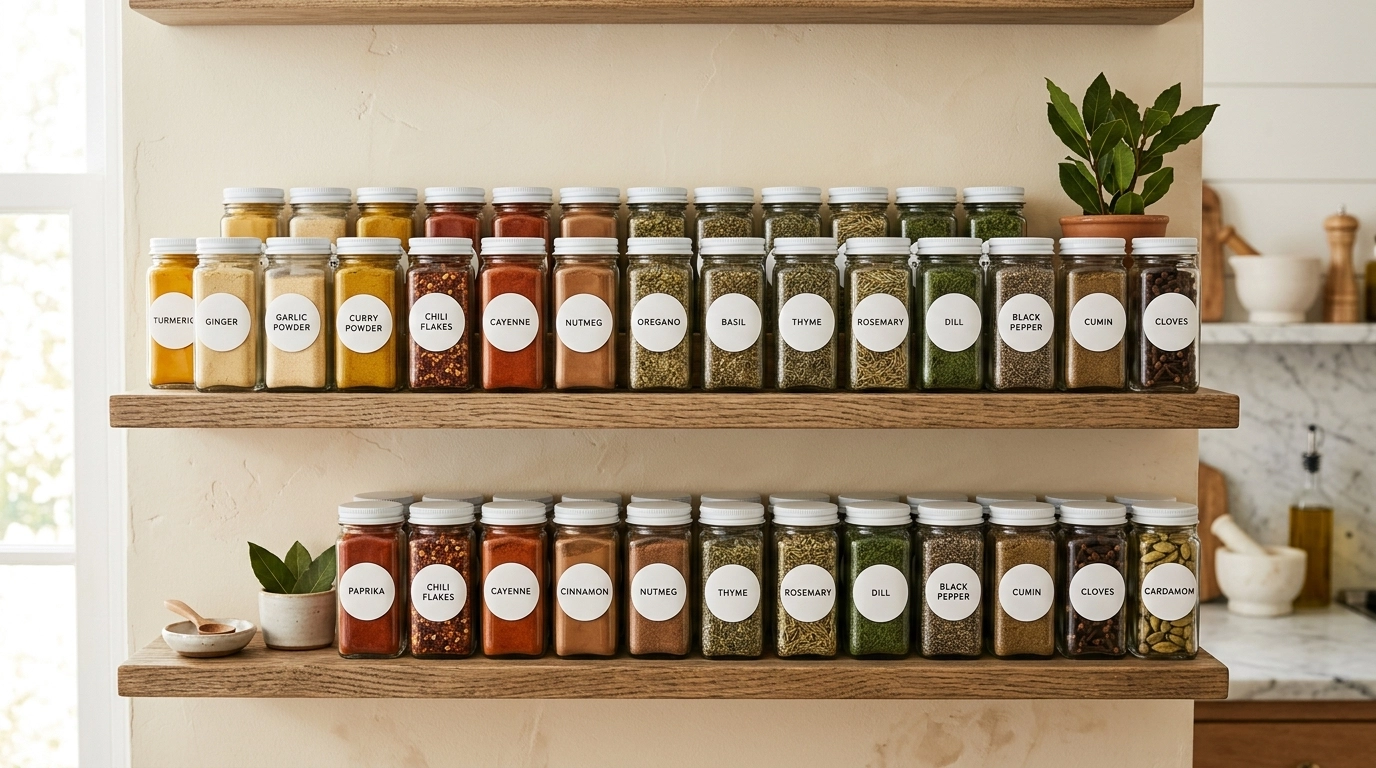
Let’s talk about spice containers. We all have that chaotic pile of tiny plastic bags and mismatched jars. It makes cooking stressful. The modern hack is to decant everything into uniform shaker jars.
I know this feels a bit extra, but trust me, it is worth it. When you use a drawer insert or a tiered rack, having matching jars makes the entire system work. You can read the labels easily, and they stack better.
You don’t need to buy fancy, expensive jars either. Basic glass shakers with a label maker (or even just a permanent marker) work perfectly. Spend twenty minutes on a Sunday doing this, and you’ll feel so much more organized every single time you cook.
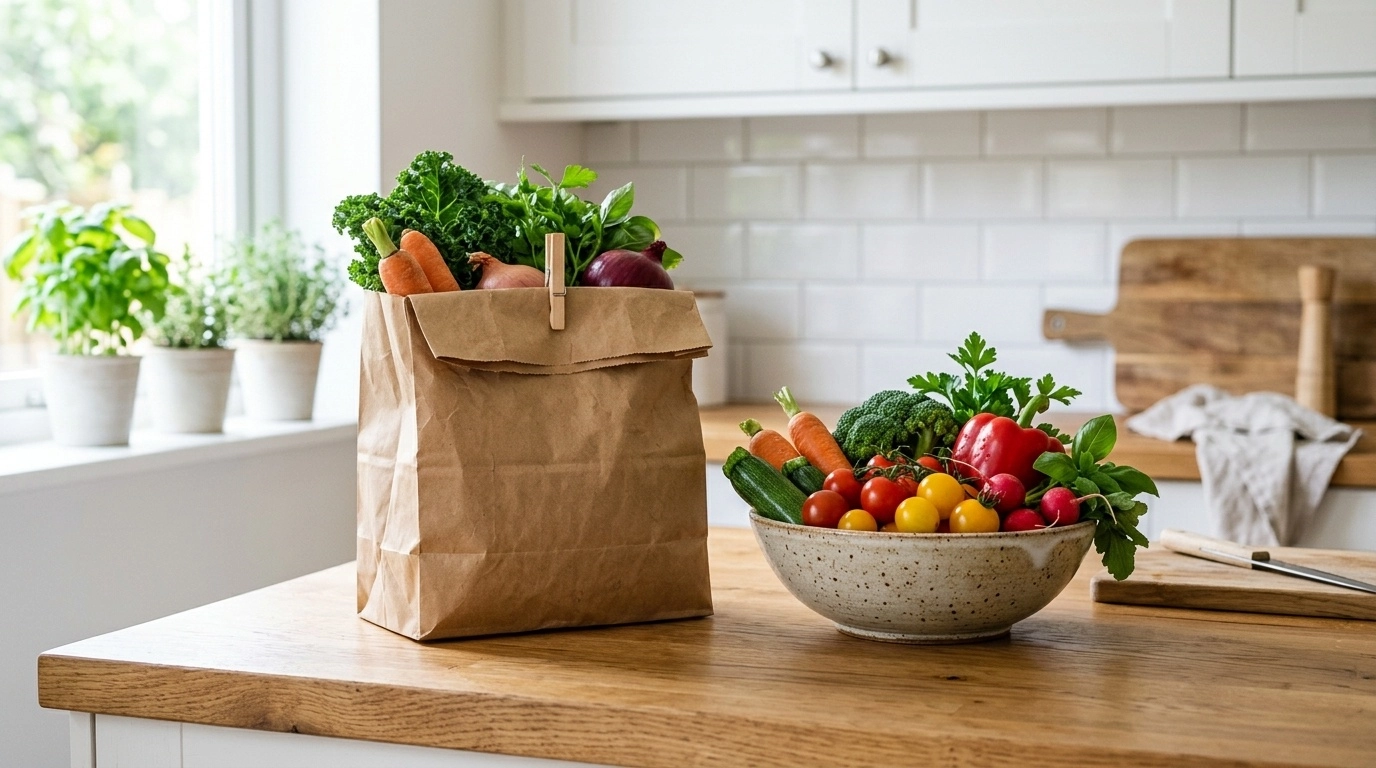
8. The Paper Bag Trick for Produce
Here is a low-tech hack that is a total game-changer for your countertop. You know those plastic containers of berries that go bad in two days? Instead of washing them and storing them in a bowl, leave them in their original container but place a clean, dry paper towel inside.
The paper towel absorbs the excess moisture that causes mold and rot. You will be shocked at how long your strawberries and blueberries last. This simple trick has saved me so much money on groceries.
Apply this same logic to your salad greens. Pop a paper towel in the bag of spinach, and it will stay crisp for a week. It’s the most budget-friendly and effective hack on this list, and it requires zero fancy storage containers.
Your Kitchen, Simplified
I hope these hacks have sparked some ideas for your own space. Remember, you don’t have to do everything at once. Pick one area that drives you the most crazy—whether it’s the spice drawer or the Tupperware cabinet—and tackle that first. Little wins build momentum, and soon you’ll have a kitchen that feels as good as it looks. It’s all about making your home work for you, not against you.
FAQ Section
1. What is the best way to organize Tupperware and lids?
Ditch the stacking method. Store lids in a file organizer or a small bin, and stack containers by size. This way, you can grab the base and the lid without knocking over the whole tower.
2. How do I keep my kitchen counters clutter-free?
The rule of “hiding 80%” is key. Keep only your daily-use appliances (like a coffee maker) on the counter. Store the stand mixer and blender in a cabinet or pantry. Clear counters instantly make the whole room look calmer.
3. Are clear containers really better for pantry storage?
Yes! Clear containers allow you to see your inventory at a glance, which reduces food waste and prevents you from buying duplicates. They also create a uniform, aesthetic look that feels much more premium than cardboard.
4. What is the best way to organize a deep kitchen cabinet?
You need to “go vertical” and “go spin.” Use tiered shelves to lift items in the back, and use Lazy Susans to easily access items in the corners. This eliminates the issue of things getting lost in the dark depths of the cabinet.
5. How often should I clean out my refrigerator?
Aim for a quick “zone check” every week before you go grocery shopping. This is the perfect time to wipe down shelves and toss any wilted veggies or old leftovers. It’s much easier to maintain a small weekly reset than a massive monthly purge.